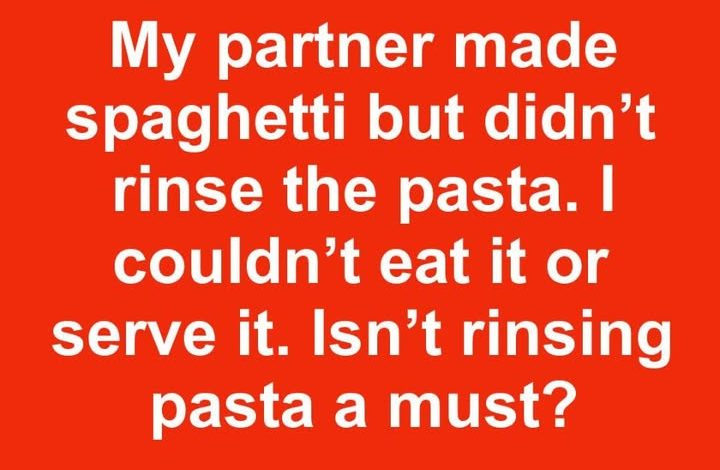
My partner cooked spaghetti but skipped rinsing the noodles. I couldn’t bring myself to eat it or offer it to anyone else. Isn’t rinsing pasta something you’re supposed to do?
The kitchen is full of long-standing habits, passed-down techniques, and strong opinions. One of the most surprisingly heated topics among home cooks? Whether pasta should be rinsed after cooking.
Your experience with your partner’s spaghetti shows how polarizing this can be. You said, “My partner made spaghetti but didn’t rinse the pasta. I couldn’t eat it or serve it. Isn’t rinsing pasta a must?” That reaction captures two different schools of thought that exist in home kitchens everywhere.
Pasta seems simple, but rinsing—or skipping the rinse—can noticeably affect the final dish. Some cooks swear by rinsing for better texture, while others argue that doing so washes away valuable starch that helps sauce cling. Below, we explore both perspectives so you can decide which approach works best for your cooking style.
1. Why Pasta Gets Sticky: The Role of Starch
To understand why people debate rinsing, you first have to look at what happens when pasta cooks. Pasta is mainly flour and water. When placed in boiling water, starch granules swell and release into the cooking water—a process called gelatinization.
Why pasta sticks:
As the pasta cooks, those starches form a thin film on the surface. When the noodles cool slightly, that coating becomes tacky, causing them to clump and feel gummy.
Why some cooks rinse:
Rinsing washes away much of that surface starch. This creates noodles that stay separate and feel cleaner on the palate, which many people prefer.
2. How Starch Impacts Flavor and Sauce
The rinsing debate isn’t only about texture—it also affects how the pasta interacts with sauce.
When pasta isn’t rinsed:
You noted that leaving starch on the noodles can make them clump and taste heavy. That sticky coating can dull flavors and create a dense mouthfeel. Rinsing removes that barrier, giving the sauce room to shine.
Why some chefs keep the starch:
In Italian cooking, the starch is considered an asset. When hot pasta goes directly into the sauce, the natural starch helps thicken and bind everything together, giving the dish a smooth, cohesive quality.
Why rinsing helps in some recipes:
For cold dishes—like pasta salads—rinsing is ideal. It cools the noodles fast and prevents them from sticking as they sit.
3. The Science of Cooking Pasta Well
Before rinsing even enters the picture, the cooking process itself sets the stage.
Use lots of water:
A big pot helps keep pasta from sticking and ensures it cooks evenly. A common guideline is 4–6 quarts of water per pound of pasta.
Salt the water:
Salt seasons pasta from the inside. A rough rule is 1–2 tablespoons of salt per gallon of water.
Cook until al dente:
Stopping the cooking at the right moment keeps the pasta firm. For hot dishes, tossing the pasta straight into the sauce prevents further cooking. For cold dishes, rinsing with cool water stops the cooking quickly.
4. When Rinsing Makes Sense—and When It Doesn’t
| Type of Dish | Should You Rinse? | Reason |
|---|---|---|
| Hot pasta dishes (marinara, alfredo, carbonara) | No | The starch helps the sauce cling and improves texture. |
| Cold pasta salads | Yes | Prevents clumping and cools the noodles. |
| Stir-fried or Asian-style noodle dishes | Yes | Removes starch that would cause sticking in a hot pan. |
In Italy, pasta is rarely—if ever—rinsed. Their approach embraces the starch as part of the final dish’s texture and body.
5. Fixing Sticky Pasta
If unrinsed pasta starts to clump together, there are easy solutions:
- Add the sauce immediately: Hot pasta combines better with hot sauce, distributing the starch.
- Use a little fat: A drizzle of olive oil or a small pat of butter helps separate stuck noodles.
- Quick rinse: If the pasta has already cooled into a solid mass, a brief rinse can help loosen it—though it will remove some starch needed for sauce adhesion.
6. Tips for Better Pasta Every Time
Professional and home cooks alike often share these guidelines:
- Leave pasta unrinsed for classic Italian-style dishes.
- Rinse for cold recipes or dishes where noodles need to stay separate.
- Always taste early and cook until al dente.
Understanding what starch does—and choosing whether to rinse based on the dish—will help you get the ideal texture for any pasta recipe you make.