Entitled Woman Walked Out on $112 Bill — She Didn’t Know She Picked the Wrong Grandma
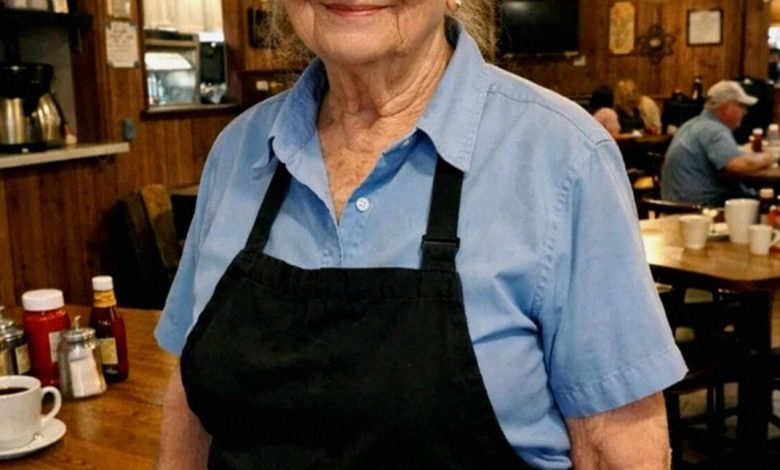
My name is Esther. I’m 72 years old, and I’ve been working as a waitress in the same small diner in a Texas town for more than two decades. Most customers are polite. Some are in a rush. A few come in grumpy before their coffee. But almost everyone shows basic respect.
Last Friday, one woman decided she didn’t need to.
I may not move as quickly as I did years ago, but I still remember every order, rarely spill a drink, and treat every person who walks through the door like a guest at my own table. That’s the way I was brought up, and it’s the way I’ve always done my job.
I never meant to stay at the diner this long. After my husband Joe died, I took the job just to get out of the quiet house. I thought I’d stay a few months—maybe a year. But the place grew on me. The routine, the regular customers, the feeling that someone needed me there.
It’s also the place where Joe and I first met. One rainy afternoon back in 1981, he walked in soaked from head to toe and asked if we served coffee strong enough to wake the dead. I told him ours could probably raise them. He laughed so hard he came back the next day—and the day after that. Six months later, we were married.
After he passed, the diner became my steady ground. Sometimes I still imagine him sitting at table seven, smiling at me while I carry plates past.
Last Friday was the usual lunch rush—every booth filled, the kitchen working nonstop. I was moving from table to table when a young woman walked in holding her phone up, livestreaming as if the whole diner were just a backdrop.
She sat in my section.
I brought her water and greeted her. “Welcome, ma’am. What can I get started for you?”
She didn’t look at me. Instead she spoke to her phone. “Hey guys, it’s Sabrina. I’m at this adorable little vintage diner. Let’s see how the service is.”
Her order was very particular: a chicken Caesar salad with no croutons, extra dressing, and the chicken warm—but not too hot. Sweet tea, but only if it was made with real sugar.
I brought the tea. She tasted it and made a face for the camera. “You guys, this tea is barely cold. Did they even try?”
It wasn’t warm at all—I had just poured it. But I kept my smile. “Would you like me to bring you a fresh glass?”
“Yes. And maybe this time they can remember the ice.”
There had been ice.
When her salad came, she inspected it dramatically for her viewers. “This chicken looks dry. And where’s the extra dressing?”
“It’s on the side, ma’am,” I said.
She lifted the cup. “This is extra?”
“If you’d like more, I’ll gladly bring it.”
“Obviously.”
For the next half hour she found something wrong with everything—the lettuce, the chicken, the “atmosphere.” None of it was true. Yet she finished nearly all of the meal.
When I set the check on the table, she stared at it.
“One hundred and twelve dollars? For this?”
“Yes, ma’am. That includes the salad, sides, the dessert sampler, and your drinks.”
She turned the phone toward herself. “They’re trying to overcharge me.” Then she looked at me. “You’ve been rude the entire time. I’m not paying for bad service.”
She grabbed her purse, smiled into her phone, and walked right out the door.
I watched it close behind her.
And then I smiled.
Because she had chosen the wrong grandmother to mess with.
I walked straight to my manager. “That woman just left without paying a hundred-and-twelve-dollar bill.”
He sighed. “It happens sometimes, Esther. We’ll just comp it.”
“No, sir.”
He looked surprised. “What do you mean?”
“I’m not letting someone get a free meal because they decided to put on a show.”
I turned to Simon, one of the younger servers. “You still have that bicycle, son?”
He grinned. “Sure do.”
“Good. Let’s go collect.”
Simon laughed. “Looks like she picked the wrong grandma.”
We headed down Main Street, and it didn’t take long to find her. She was still walking along, livestreaming.
I leaned out and called clearly, “Ma’am! You forgot to pay your one hundred and twelve dollar bill!”
She froze. Her phone swung around, and people nearby started staring.
“This is harassment!” she snapped.
“No, sweetheart,” I said calmly. “This is just collecting what you owe.”
She hurried into a grocery store. I followed. She was standing near the produce section talking to her phone, holding up a tomato. I stepped into the frame.
“Still waiting on that bill,” I said.
She gasped and dropped her phone. A woman nearby laughed. “Honey, just pay the lady.”
Sabrina rushed out again.
She tried a shoe store. Then a coffee shop. The park. Even a yoga studio.
Every time she thought she had gotten away, I showed up again—calm, polite, and patient.
Finally, inside the yoga studio, she had enough. In the middle of a class she dug cash out of her purse and shoved it toward me.
“Fine! Here! One hundred and twelve dollars! Just stop following me!”
I counted the money carefully.
“You eat, you pay,” I said. “That’s how the world works.”
When we returned to the diner, everyone was cheering. Danny looked at me like he’d just seen a miracle. Simon held up his phone.
“You’re everywhere online,” he said. “People are calling you the Respect Sheriff.”
The staff even made me a little badge. I pin it to my apron every shift now.
Sabrina never came back. But I did hear she posted an apology video about learning a lesson in humility from an elderly waitress.
Good.
Some people think getting older makes you weak. It doesn’t. It just gives you more years to figure out exactly where you stand—and the confidence to stand there.
In our diner, respect isn’t optional.
It’s part of the menu.