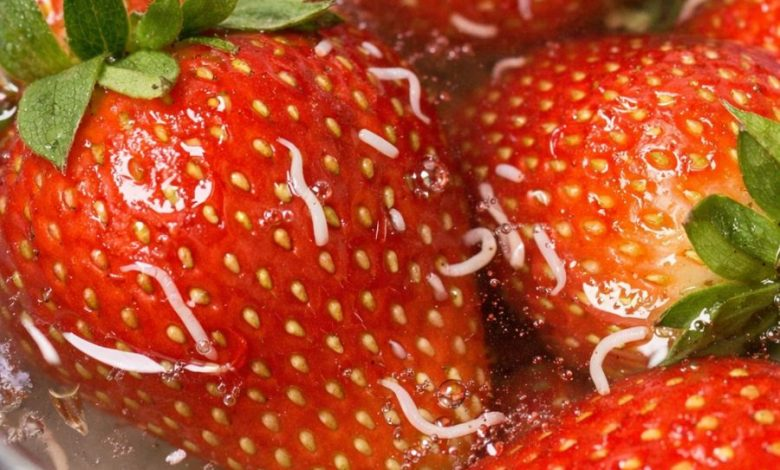
I soaked my strawberries in salt water and these white things wriggled out?
Noticing tiny white creatures moving in your fresh fruit can be surprising for many people. Recently, this topic has been widely discussed online, leading many to question whether their favorite summer berries are still safe to eat. Let’s explore what might actually be happening inside strawberries, the science behind the well-known “salt water test,” and how you can prepare your fruit with peace of mind.
What Are the Tiny White Creatures in Strawberries?
If you’ve ever soaked strawberries in salt water and seen tiny white “worms” emerge, you’re not alone. These small creatures are typically larvae (maggots) from certain types of fruit flies rather than true worms. They are extremely small—usually about 1 to 3 millimeters long—and because they are pale and nearly transparent, they can be difficult to notice while still inside the fruit.
The larvae develop within the berry because the soft, sugary interior provides a perfect food source. Female fruit flies place their eggs just under the fruit’s skin, and once the eggs hatch, the larvae remain inside while feeding and growing. Warm and humid conditions allow this process to occur fairly quickly.
The Insect Responsible: Spotted Wing Drosophila
The insect most often responsible is known as the spotted wing drosophila (SWD). Unlike many fruit flies that prefer overripe or decaying fruit, this species frequently targets fresh, ripening fruit still on the plant.
Adult SWD flies are tiny with light-colored bodies and red eyes. Males have noticeable dark spots on their wings, which is how the species got its name. Female flies possess a specialized egg-laying structure that allows them to pierce the skin of firm fruit and deposit eggs inside. Because of this ability, they can affect crops such as strawberries, blueberries, cherries, and raspberries.
Why Salt Water Makes the Larvae Appear
Many people use salt water as a method to clean fruit. A common mixture is about one tablespoon of salt per cup of water. When berries are submerged in this solution, the salt alters the surrounding environment.
Through a process called osmosis, the saltwater pulls moisture away from the larvae. This creates stress for them, prompting them to leave the fruit and move into the water, where they become visible.
Are These Larvae Dangerous?
Although the thought may feel unpleasant, these larvae are generally not considered harmful to humans. They are not known to carry diseases that would cause illness if accidentally consumed.
Small insects or fragments can sometimes be present in fresh produce, especially fruits grown outdoors. Many people have likely eaten them unknowingly at some point. However, if a berry contains many larvae, it may spoil faster or develop a softer texture.
How Often Does This Happen?
This can occur naturally in fruit crops. Whether strawberries are purchased from a grocery store, a local market, or picked from a garden, there is always a possibility that fruit flies have laid eggs in some berries.
Farmers use monitoring systems and pest-control strategies to limit these insects, but completely eliminating them can be difficult—particularly during warm growing seasons when fruit flies reproduce rapidly.
Ways to Clean Strawberries Properly
If you want to clean your strawberries thoroughly, there are a few simple methods you can try:
Cold water rinse:
The simplest option is rinsing strawberries under cold running water before eating them. This removes dirt and some surface residues.
Vinegar solution:
Combine one part white vinegar with three parts water, soak the berries briefly, then rinse them well. This can help reduce bacteria on the surface.
Salt water soak:
Placing berries in salt water may encourage any hidden larvae to exit the fruit. If you choose this method, rinse the berries afterward to remove any salty taste.
When Strawberries Should Be Discarded
You usually don’t need to throw away fruit simply because of something you saw online. Instead, check for clear signs that strawberries have spoiled, such as:
- Visible fuzzy mold
- A sour or fermented odor
- Extremely soft or mushy texture
- Liquid leaking from the fruit
If the strawberries appear bright, firm, and smell fresh, they are generally safe to eat after washing. In many cases, those tiny white larvae are simply part of the natural ecosystem where the fruit grows, and proper cleaning is all that’s needed before enjoying your berries.