Honoring the Lasting Legacy of Hollywood Icon Kirk Douglas
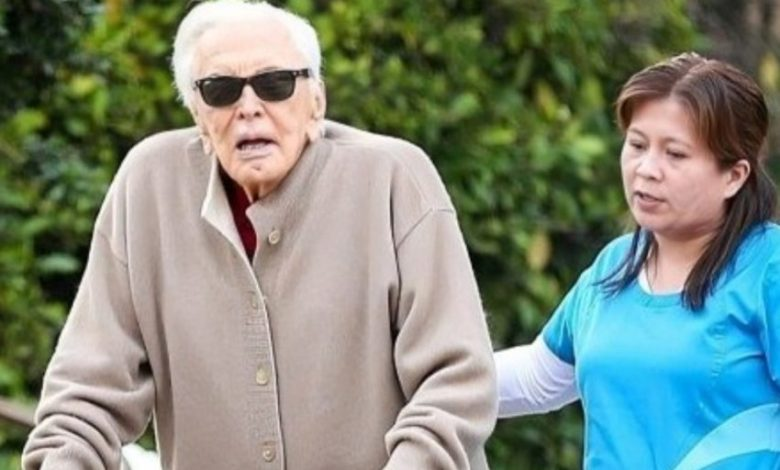
In the history of Hollywood’s Golden Age, few figures loom as large or leave as lasting an impact as Kirk Douglas. A towering presence both on and off the screen, Douglas carved out a legacy that permanently shaped cinema. His rise from modest beginnings to becoming one of the most recognizable and influential actors of his era stands as a powerful testament to his talent, determination, and unyielding drive.
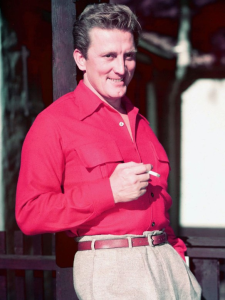
Born Issur Danielovitch in Amsterdam, New York, Douglas grew up as the son of Russian-Jewish immigrants and faced significant hardship early in life. Through relentless perseverance and a formidable work ethic, he overcame those obstacles and forged the resilience that would define his career. These early struggles informed the intensity and emotional depth that became hallmarks of his performances.
Douglas’s ascent in Hollywood was swift. He emerged as a highly sought-after leading man, known for his commanding screen presence and dramatic power. He excelled at portraying layered, morally complex characters, often exploring the darker edges of human nature. His breakthrough role came in 1949’s Champion, where his portrayal of a ruthless boxer earned him his first Academy Award nomination and showcased his ability to convey raw emotion and physical force—qualities that resonated strongly with audiences.
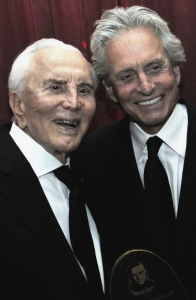
Over the course of his long career, Douglas demonstrated remarkable range across a series of iconic films. Among them were The Bad and the Beautiful (1952), Lust for Life (1956), and Stanley Kubrick’s searing anti-war film Paths of Glory (1957). His depiction of Vincent van Gogh in Lust for Life earned another Academy Award nomination, underscoring his commitment to portraying deeply troubled and complex figures. Paths of Glory, which he both starred in and actively supported, remains a powerful example of his dedication to meaningful, challenging storytelling.
Beyond acting, Douglas was a staunch advocate for independent filmmaking and creative freedom. One of the most defining moments of his career—and of Hollywood history—came with Spartacus in 1960. As both star and producer, Douglas made the bold decision to publicly credit blacklisted screenwriter Dalton Trumbo, helping to dismantle the Hollywood blacklist. This courageous stand solidified his reputation as a man of principle and a defender of artistic integrity, extending his influence far beyond the screen.
Kirk Douglas’s legacy reaches well beyond his filmography. He was also an accomplished writer, a committed philanthropist, and a survivor who overcame both a stroke and a devastating helicopter accident. His longevity in Hollywood, combined with his dedication to social justice and his unforgettable performances, firmly established him as a true cinematic legend. His unwavering commitment to his craft and moral courage continue to inspire generations of actors and filmmakers. Through both his work and his principles, Kirk Douglas remains forever synonymous with the Golden Age of Hollywood and the enduring power of artistic conviction.