“How Sleeping on Your Left Side Improves Gut Health”
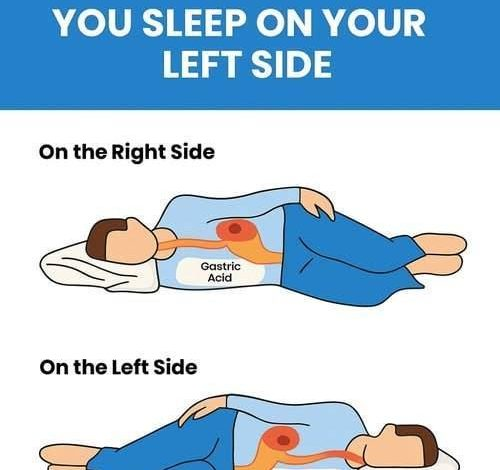
You’ve probably heard the advice: “Sleep on your left side—it’s better for digestion.”
But is that just a familiar myth, or is there actual science behind it?
As it turns out, there’s real anatomical logic supporting the idea. Sleeping on your left side can encourage better digestion, ease heartburn, and even help with gut motility—especially after eating or for people dealing with acid reflux or IBS.
Why Left-Side Sleeping Helps Your Gut
🔄 Your Digestive Tract’s Natural Layout
Your digestive organs aren’t arranged symmetrically—and that makes a difference:
- Your stomach and pancreas lie primarily on the left.
- The ileocecal valve, where the small intestine meets the large intestine, is on the lower right.
- Waste travels upward through the ascending colon (right side), across the transverse colon, then down the descending colon (left side) toward the rectum.
When you lie on your left, gravity helps this natural process along, allowing food and waste to move in the direction your body already prefers.
🔥 Less Heartburn and Acid Reflux
One of the biggest benefits? Reduced GERD symptoms.
Here’s why:
- The stomach sits slightly left of center.
- The esophagus connects at the top-right.
- Lying on your right can position the stomach above the esophagus, making reflux more likely.
- Lying on your left keeps the stomach lower, so gravity helps prevent acid from rising.
✅ The Journal of Clinical Gastroenterology reported that left-side sleeping significantly decreased reflux episodes compared to lying on the right or on the back.
💧 Possible Lymphatic Benefits
Your lymphatic system—responsible for waste removal and immune support—drains mainly into the thoracic duct on the left side of the body. Some researchers suggest that left-side sleeping may help this drainage occur more efficiently.
(The evidence is still limited, but it’s an interesting possibility.)
When Left-Side Sleeping Isn’t Perfect
While helpful for many, it’s not ideal for everyone:
- Pregnant individuals are often encouraged to sleep on their left, so that’s a plus.
- People with certain heart conditions should consult a doctor first.
- Those with left-shoulder pain might need extra pillow support or an alternative position.
Tips for a More Digestive-Friendly Night’s Sleep
- Avoid lying down for 2–3 hours after eating.
- Use a body pillow to keep your hips aligned.
- Elevate your head 6–8 inches with a wedge pillow to ease reflux.
- Give your body time to adapt to a new sleeping position—it may take a little practice.
💡 Bottom Line
Left-side sleeping isn’t a cure-all, but it’s a simple, no-cost habit that works with your body’s natural design. If you struggle with reflux, bloating, or sluggish digestion, it’s a gentle strategy worth testing—especially after big or late meals.
Think of it as quiet, effortless support for your digestive system while you sleep.